

Planning bathroom lighting: The optimal lighting layout for your bathroom
“Think in light, not in fixtures – plan by feel,” advises architect Philipp Beck (atelier522). Only the combination of general, ambient, and task lighting creates atmosphere. “Well-planned lighting makes a bathroom 20 to 30% better,” also emphasizes Tobias Hollerbach, Interior Designer at hansgrohe. What matters: dimmable zones and adjustable color temperatures.
In this article:
- What should you consider when it comes to bathroom lighting?
- General lighting: How to make your bathroom bright enough
- Focused light at the mirror: Targeted lighting for detailed tasks
- Accent lighting: Indirect bathroom lighting for a feel-good atmosphere
- Planning bathroom lighting: The lighting layout for the bathroom
- A bright, friendly bathroom: Bathroom lighting as a design factor
- Gallery: How different lighting looks in the bathroom

Flexible bathroom lamps: brightness, color temperature, and direction
In the bathroom, what lighting needs to deliver changes throughout the day. That’s why flexible fixtures are so important. „We should think of light like time: clear in the morning, warm in the evening, soft at night“, says Philipp Beck. This is also where technical planning begins: „Choose light sources that you can adjust flexibly. Ideally, your entire bathroom lighting is dimmable and the color temperature can be adjusted. A cooler setting in the morning mimics bright daylight – perfect for makeup or shaving. In the evening, a warm white setting is ideal for gentle relaxation“, advises Tobias Hollerbach. If dimmable light sources aren’t possible, the interior designer recommends a middle ground of 3,500 to 4,000 Kelvin.
Flexibility also brings great benefits when it comes to beam direction. With multi-head ceiling spotlights, you can target different areas of the room. Tobias Hollerbach: „This is ideal if you can’t freely run wiring, for example in a rental apartment.“ In combination with an illuminated bathroom mirror that lights the face from the front rather than from above, you create an excellent lighting foundation.
A successful lighting concept in the bathroom: basic lighting, focus and accent lighting
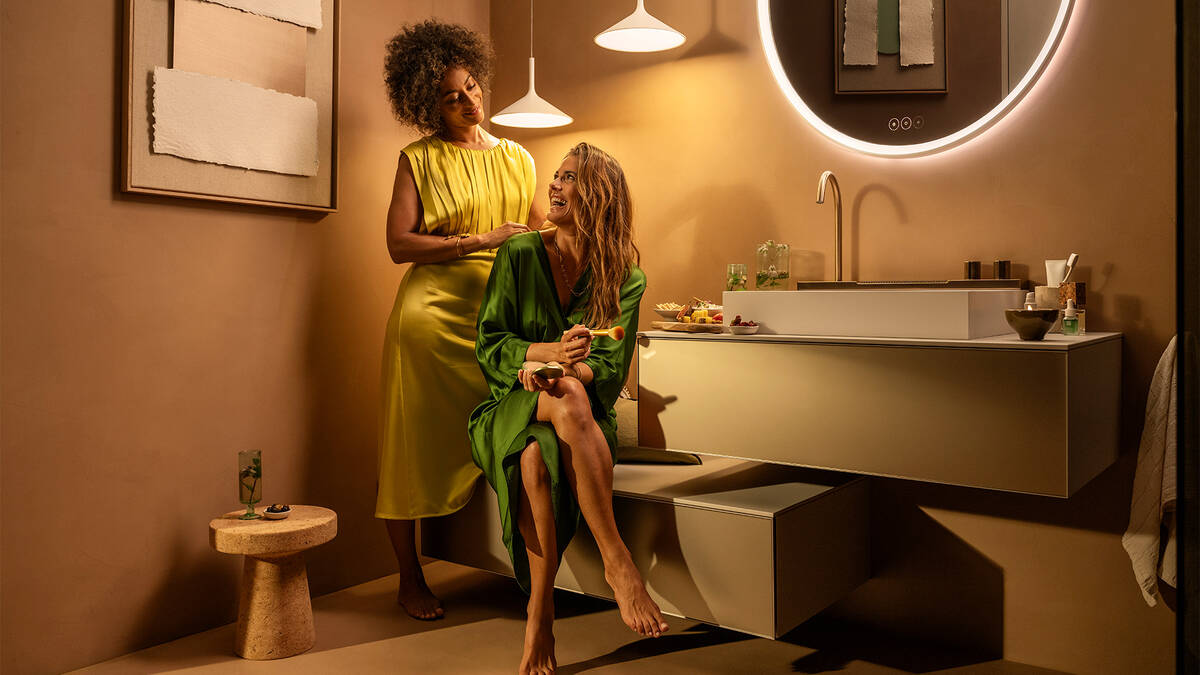
„A single ceiling spotlight only creates brightness – only zoned lighting creates atmosphere“, summarizes Philipp Beck, the key rule. Three simple categories help with implementation. Tobias Hollerbach explains: „We distinguish between basic lighting, focus or functional lighting, and ambient or accent lighting.“ While the basic lighting illuminates the room, functional lighting at the bathroom mirror gives you a clear view. Accent lighting then sets the mood for the shower or bathtub. „For a perfectly lit bathroom, it’s best to combine all three types of light – but you don’t need to install three separate lamps to do so.”
Would you like to envision your bathroom design as a whole? In the hansgrohe Bathroom Planner, you can start planning your bathroom – in 3D!

Light thinks in layers – not in points on the ceiling. Light is not a means of seeing, but of feeling. It organizes, shapes, calms, and expands the space. For your planning, that means: Don’t rely solely on overhead general lighting. Only the interplay of different light zones at varying heights creates depth, prevents harsh shadow effects, and fosters a harmonious atmosphere.
Philipp Beck, Architekt - atelier 522
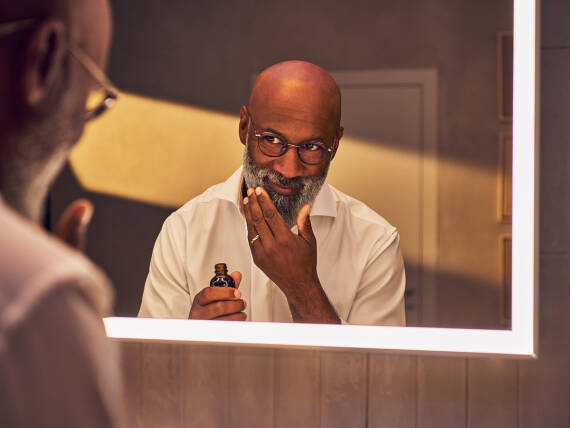
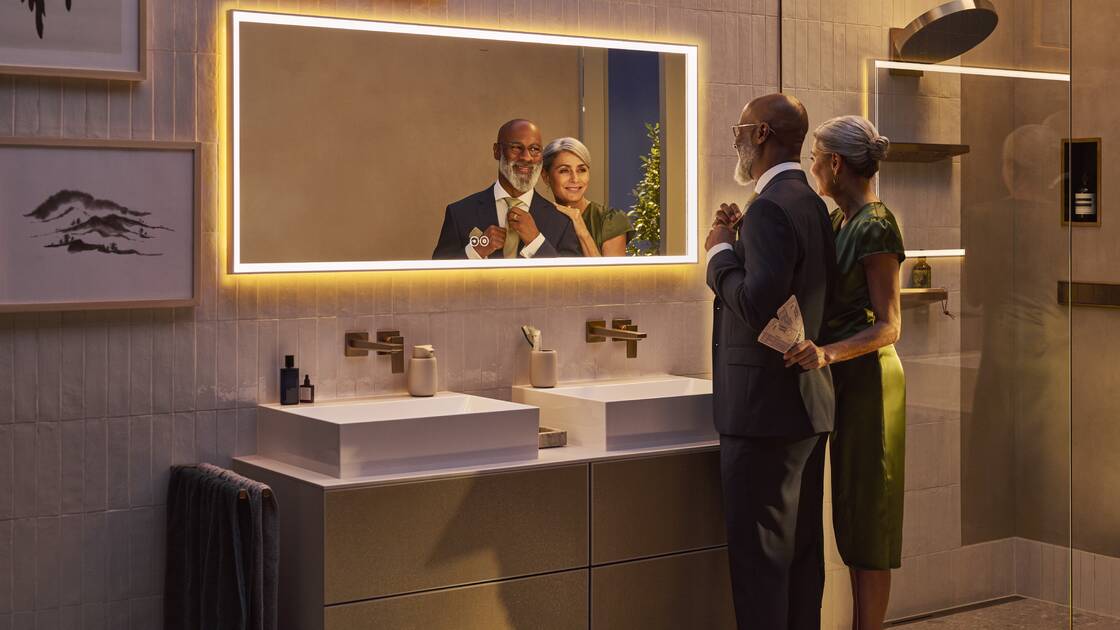
In addition to the ceiling lighting, a light source at the bathroom mirror makes putting on makeup or shaving easier: the focus or functional light. “At the bathroom mirror, a powerful, clear light is particularly important – after all, we want to see exactly how our face and hair look in daylight. To ensure the light doesn’t cast shadows on the face, it shouldn’t, as is still often the case, come from above, but rather from the front. Ideally, the mirror is illuminated all around,” says Tobias Hollerbach. It’s also especially helpful if the color temperature and intensity can be adjusted. That way, you can be sure you have the right lighting for your needs at this key area.

If you’re only upgrading your bathroom lighting, I would always recommend a large, illuminated mirror. The mirror surface itself makes the room appear larger and brighter, and good mirror lighting simplifies your bathroom routine: if the light is built into the mirror itself, rather than coming from a fixture installed above it, it shines from the front and casts no shadows on your face.
Tobias Hollerbach, Senior Interior Designer bei hansgrohe
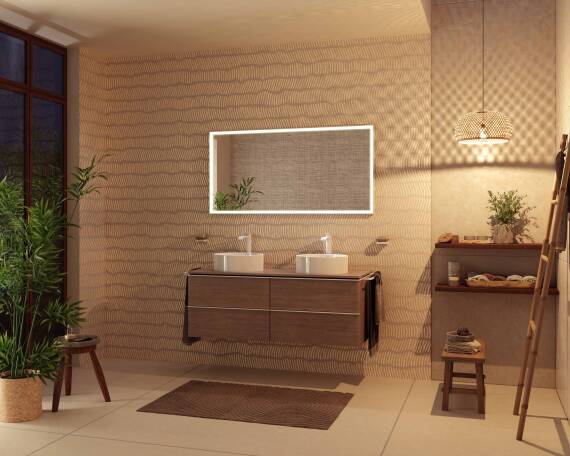
Once the basic and focus lighting is in place, you can create even more wellness atmosphere with indirect lighting. Tobias Hollerbach: „Interior designers refer to this type of lighting as accent or ambient lighting.” LED light strips, for example in the shower or in niches, are particularly popular for this final touch. Important: „To ensure a high-quality finish, make sure the individual points of light aren’t visible. To do this, either use a diffuser, i.e. a cover installed at a certain distance in front of the light strip to diffuse the light, or opt for COB light strips. These produce continuous light.” Another option is individual lamps: „For particularly effective indirect lighting, my tip is to position the lamps so that they illuminate something, for example a work of art or a piece of furniture. This has a greater impact than a wall light with no clear focal point.”
The larger the bathroom, the more important a well-thought-out lighting layout becomes. Tobias Hollerbach: „I recommend thinking in zones for bathroom lighting and then lighting them individually. For example, it’s not very effective to space recessed spotlights at even intervals across the entire ceiling. That can look a bit like a starry sky.” It’s better to install spotlights – or flat panels – centered above a bathroom feature such as the bathtub. The shower and mirror are also distinct zones that deserve their own lighting: this could be a light strip in the shower or an illuminated mirror.
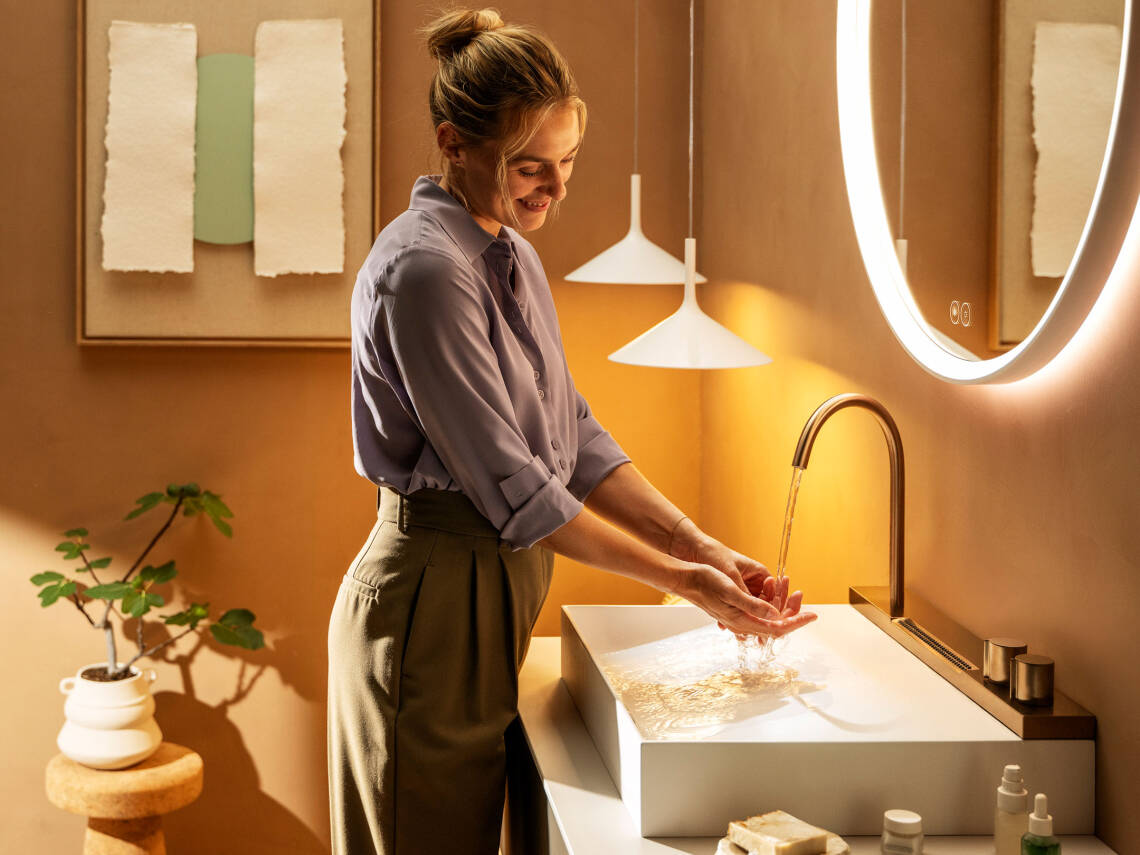
Not every bathroom has the option to install additional lights for a subdued wellness atmosphere. In that case, dimmable general or mirror lighting is particularly helpful. In a less bright, warm white setting, both can become the optimal ambient lighting.
Tobias Hollerbach, Senior Interior Designer
„Most people want a spacious, bright bathroom. That looks friendly, tidy, and makes the daily routine easier”, says Tobias Hollerbach. This is achieved with sufficiently bright general lighting and functional task lighting at the bathroom mirror. If you like, you can further shape the space with light strips or other indirect lighting to create accents. „My best tip for the right mood is to choose options for all light sources that are dimmable and let you adjust the color temperature.” The other colors and materials in the bathroom also contribute to the mood: So the room doesn’t immediately swallow the light, a soft, off-white wall color is a good choice. „For surfaces, you can work with different textures: Matte tiles, for example, with a slightly roughened texture, scatter the light in an interesting way. A beautiful plaster finish can also create an intriguing reflective surface.”
Want to try out a few different design styles? The hansgrohe bathroom planner is perfect for that. Try it out now:
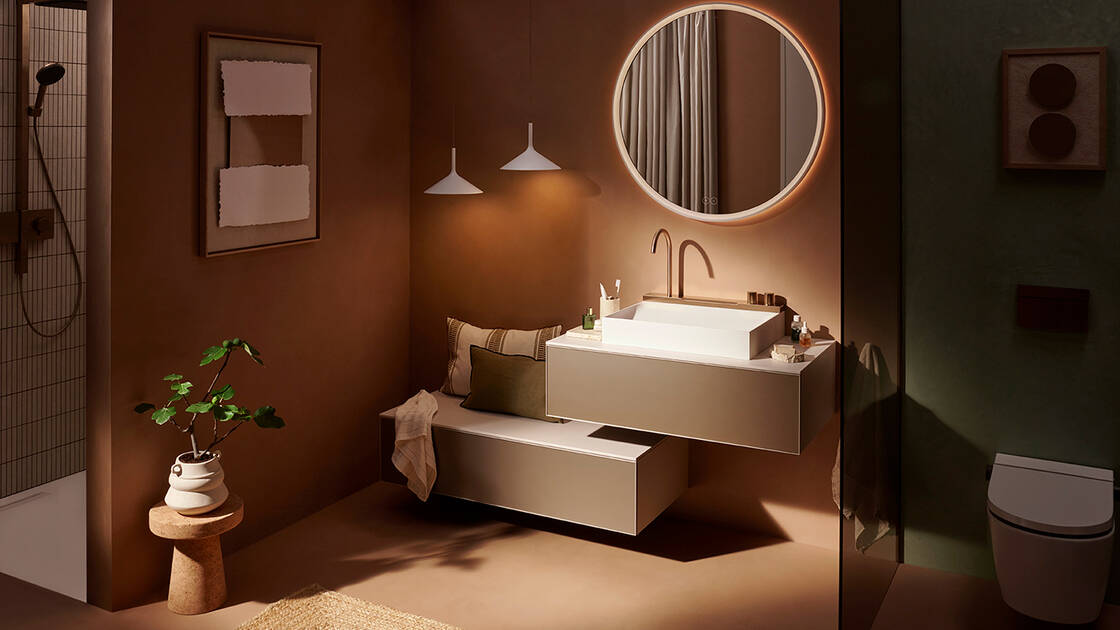
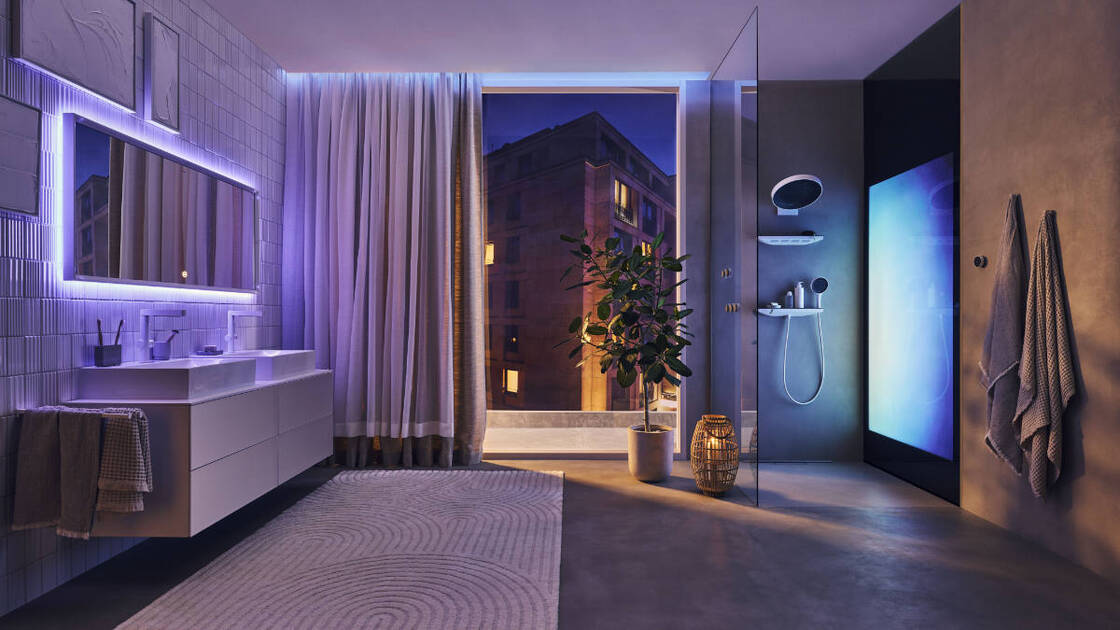
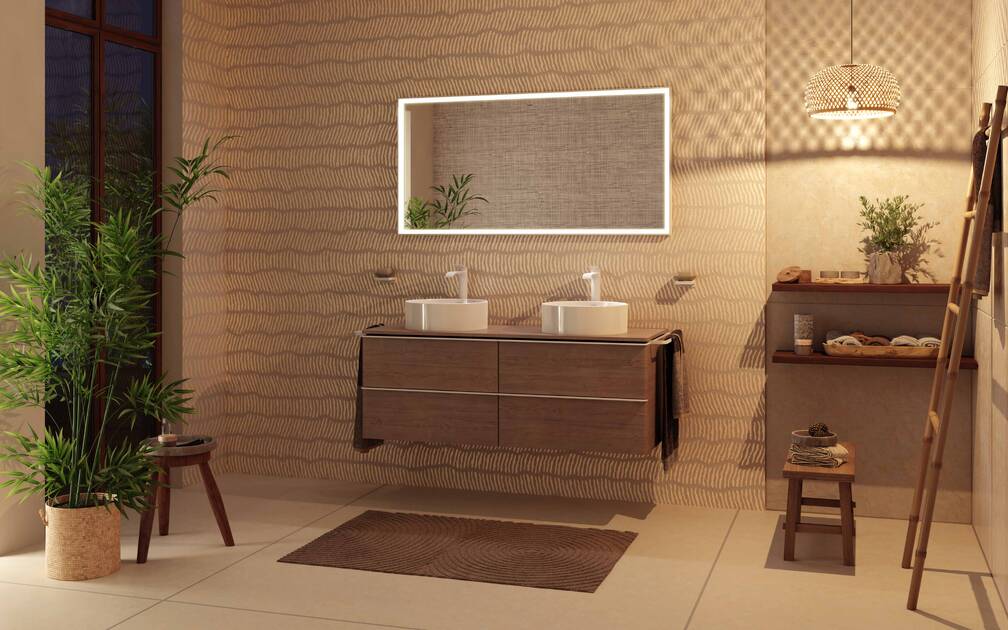
How different lighting affects the bathroom

Frequently Asked Questions about Bathroom Lighting
For general lighting and relaxing lighting moods, warm light is recommended. When applying makeup or shaving, use slightly brighter, cooler light to see details clearly. Adjustable lights are particularly helpful – this way you can not only adjust the temperature to the time of day and your mood, but also coordinate the lights with one another. A good middle ground between cool and warm is 3500 to 4000 Kelvin.
In small bathrooms, bright, even lighting is particularly important. Large mirrors with integrated lighting or clever lighting solutions without harsh shadows make the room look larger and more open.
You should plan your bathroom lighting early on to avoid costly retrofits later: Think about which areas of the bathroom you want to illuminate, which objects to highlight, and where you want to install lamps. Keep general, task, and ambient lighting in mind. Also plan for outlets and dimmer switches now. When choosing your lamps, in addition to technical safety (identified by an IP rating) and design, the dimmability for different needs (morning vs. evening) is key; for non-dimmable lamps, consider the brightness of the entire bathroom (between 4,000 and 8,000 lumens) and the color temperature (3,500–4,000 Kelvin is a good middle ground).
When choosing the right light, first consider technical aspects such as the protection class and the test mark to ensure the model can be used in a damp room.
Bathroom lights must be protected against splashing water and condensation. The IP classification specifies the protection classes denoted by the IP number. The following numbers are particularly relevant for the bathroom:
- IP44: Protected against splashing water (standard for mirrors & ceiling)
- IP65: Protected against water jets (ideal for the shower area)
- IP67: Waterproof when temporarily submerged (for floor spotlights)
It is important to pay attention to this classification, as lights with a sufficiently high IP protection class are usually enclosed, so neither splashing water nor condensation can penetrate.
Bathroom lighting can be divided into three areas: general lighting (usually the ceiling light), task or focus lighting (often an illuminated bathroom mirror) as well as ambient or accent lighting (indirect lighting in the shower or in niches, or spotlights that are directed at furnishings). To get the most out of your bathroom lighting, flexibly adjustable lights (brightness and color temperature) and a mirror with front-facing lighting are especially helpful.

